

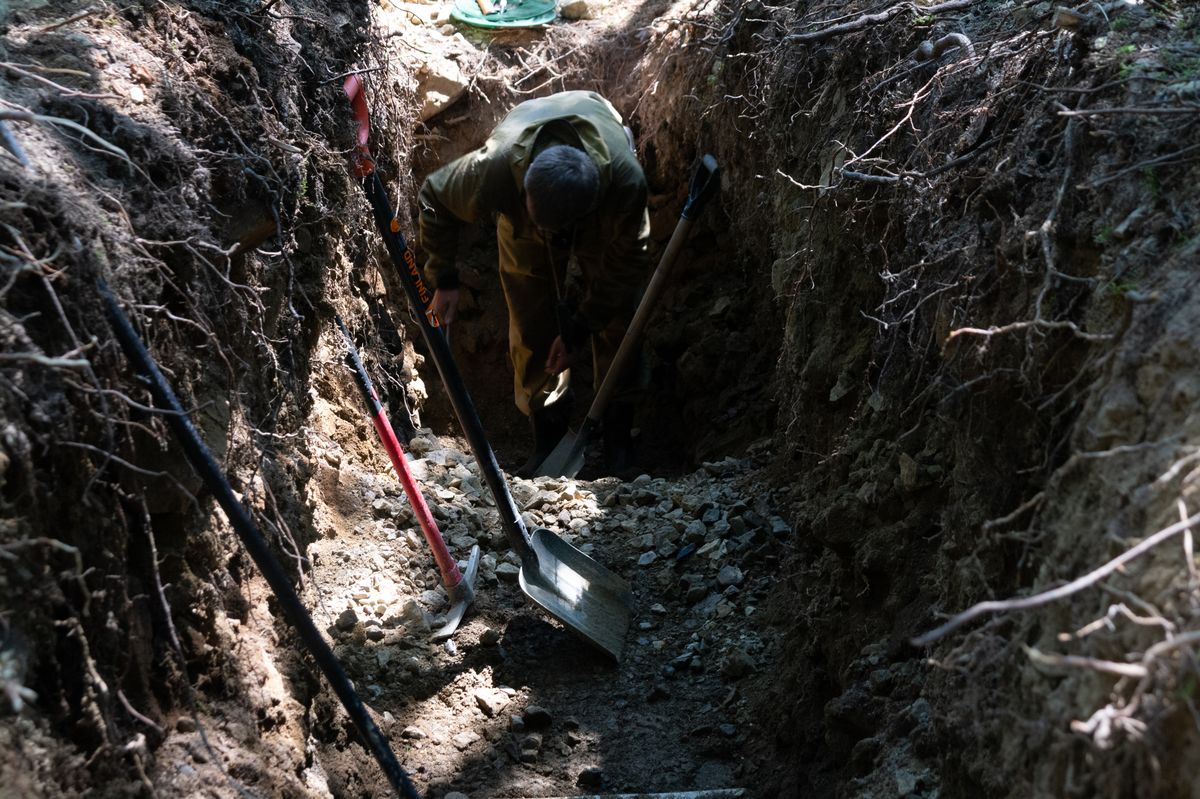
Earthwork estimates are built on quantities calculated from a survey and a grading plan, and those quantities are only as good as the assumptions behind them. Moisture content, unsuitable material, and haul distance can all shift the real cost of moving dirt well past the number on the original takeoff.
Carolina Precision Grading provides site development solutions throughout the Carolinas, including land clearing, demolition, earthwork, storm drainage, erosion control, asphalt services, road work, and culvert-related work. The company positions itself around expertise, quality, trust, professionalism, and clear communication.
What to Look For
Earthwork planning is where a project’s real cost and schedule risk usually live, long before drainage or paving become the conversation.
- Ask how cut and fill quantities were calculated, and what assumptions they’re based on.
- Confirm whether the plan balances on site or requires hauling material in or out.
- Check how the estimate handles soil that turns out to be unsuitable for reuse.
- Look for a clear haul-off plan, including where material actually goes.
- Ask how moisture conditioning is handled if soil is too wet to compact properly.
Start with CPG’s site work capabilities, broader service overview, and the company’s Carolina Precision Grading homepage for context on how the work fits into full site development.
Common Scope Items
These are the earthwork-specific details worth pinning down before quantities turn into invoices.
| Item | Why It Matters | Question to Ask |
| Cut and fill balance | An unbalanced site means extra hauling in either direction | Does this site balance on site, or does it require import or export? |
| Unsuitable material | Material that can’t be reused adds haul-off and import costs | How much unsuitable material is assumed, and what if there’s more? |
| Haul distance and destination | Distance to the disposal or borrow site drives real cost | Where is haul-off material actually going, and how far is it? |
| Moisture conditioning | Wet clay can’t be compacted without drying or amending | What’s the plan if soil is too wet to compact on schedule? |
| Quantity verification | Estimated quantities and actual quantities can differ meaningfully | How will actual quantities be tracked and reconciled against the estimate? |
For outside reference, resources like NRCS soil resources can help owners understand soil, permitting, safety, erosion control, or local development requirements.
Questions Worth Asking
Get specific answers to these before treating an earthwork number as final.
- How confident are you in the cut and fill balance for this site?
- What triggers a change order related to unsuitable material?
- Where does excess material go, and where does imported fill come from?
- How does weather or moisture affect your production schedule here?
- How will quantities be verified as work progresses?
Those answers should connect back to the finished grade, not just the first day of dirt work. If asphalt, road work, culverts, or retaining walls are involved, review CPG’s asphalt services, road construction services, and bridge and culvert work.
Red Flags to Watch For
An earthwork number that looks clean on paper can still hide real risk.
- No explanation of how cut and fill quantities were calculated.
- A flat “we’ll handle it” answer about unsuitable material with no pricing structure.
- No stated haul-off destination or distance.
- Unwillingness to discuss what happens if the site doesn’t balance.
- No plan for verifying quantities as the work actually happens.
A strong contractor should explain how the finished grade supports the rest of the construction plan. That includes where runoff is intended to go, how elevations relate to foundations and paved areas, and whether additional drainage features are needed.
Frequently Asked Questions
Why do earthwork costs change after the estimate is done?
Because the estimate is based on assumed quantities and soil conditions. Once cutting starts, actual moisture, material quality, and volume can differ from the takeoff, which changes the real cost.
What does it mean if a site “doesn’t balance”?
It means the volume of material to be cut doesn’t match the volume needed for fill, so material has to be hauled in or out. That hauling is a real cost that should be priced explicitly.
Why does local experience matter for earthwork specifically?
Regional soil behavior affects how much moisture conditioning or amendment is needed, and how reliably an estimate’s assumptions will hold up in the field.
Should I pick the lowest earthwork bid?
Only if the quantities and assumptions behind it match the other bids. A lower number built on optimistic quantities isn’t actually the lower cost once the ground tells a different story.
The Bottom Line
Earthwork planning is where the real budget and schedule of a project get set, well before drainage or paving enter the conversation.
Carolina Precision Grading brings Charlotte-based site development experience, modern equipment, and a communication-first approach to grading and construction support across the Carolinas. For project questions, use the CPG contact section.

Leave A Comment