

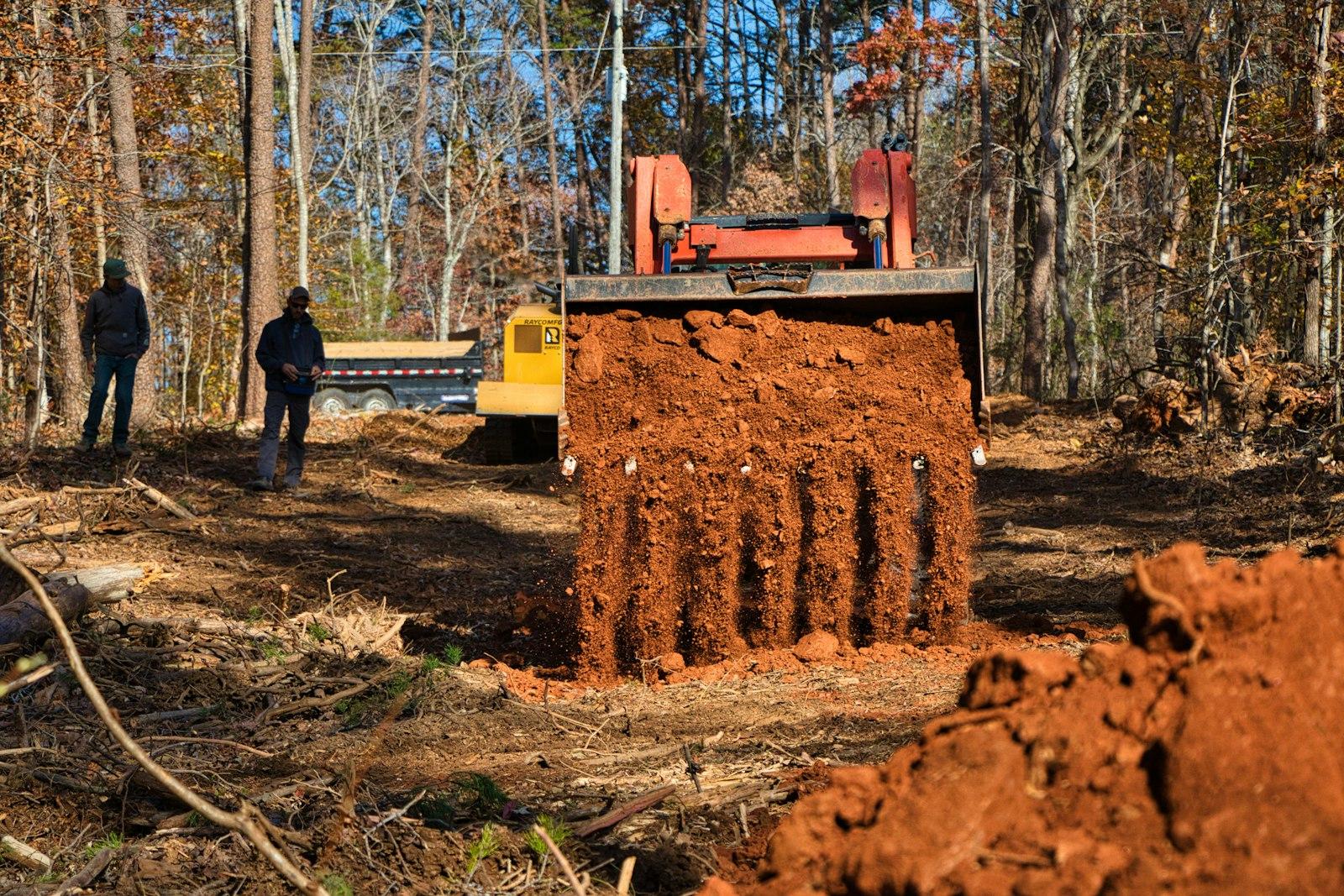
For developers, general contractors, and infrastructure teams, land clearing is the first production phase in turning raw acreage or a redevelopment parcel into a construction site. In the Charlotte region and across the Carolinas, clearing has to support everything that follows: mass earthwork, access, storm drainage, sanitary sewer, water distribution, erosion control, roads, building pads, and finished grades.
A site can look clear and still be unprepared for a large-scale development. Roots, stumps, buried debris, unstable soils, poorly planned haul routes, and clearing that conflicts with future utility corridors can create expensive rework. The goal is to leave behind a workable site that earthwork and infrastructure crews can develop efficiently, safely, and in the sequence shown on the plans.
What Land Clearing Actually Includes
Land clearing typically begins with identifying what must stay and what must go. Property lines, easements, protected areas, existing utilities, and future construction limits all influence how much of a site should be disturbed. On larger projects, this is coordinated with the grading plan rather than treated as a separate demolition-style task.
Typical clearing work may include:
- Removing trees, brush, and dense vegetation within approved limits.
- Grubbing stumps and major root systems from areas that will support structures, pavement, utilities, or engineered fill.
- Separating usable material from debris that must be hauled off.
- Creating equipment access and staging areas without disturbing more ground than necessary.
- Preparing the cleared surface for rough grading and earthwork.
Carolina Precision Grading includes land clearing within its broader site work capabilities, allowing clearing decisions to stay connected to the grading, drainage, and infrastructure work that comes next.
Why Grubbing Matters Before Grading
Cutting a tree at ground level is not the same as preparing the soil below it. Stumps and large roots left beneath a future building pad, road, or parking area can decay over time and leave voids. Those voids can contribute to settlement, cracking, and uneven surfaces.
Grubbing removes that buried organic material so unsuitable soil can be identified and replaced or compacted as needed. This is especially important anywhere the finished project depends on consistent support beneath foundations, concrete, asphalt, or utility trenches.
Managing Erosion During Clearing
Clearing exposes soil before final drainage systems are in place, which makes erosion control an immediate concern. The EPA’s construction stormwater guidance explains why disturbed soil must be managed during active construction, not only after the site is finished.
Depending on the project, crews may establish stabilized entrances, temporary diversion paths, sediment controls, or phased clearing limits. The objective is to keep disturbed soil from washing into neighboring properties, streets, or drainage systems while earthwork is underway.
Charlotte-Area Site Constraints to Watch
Local development requirements can affect when and how clearing starts. The City of Charlotte’s Growth and Development resources are useful for understanding development review, while Mecklenburg County requirements may also apply depending on the property and project scope.
Charlotte-area projects also encounter a mix of clay-heavy soils, wooded lots, redevelopment sites, and tight urban parcels. A clearing plan that works on open acreage may not work on a constrained site with adjacent buildings, traffic, utilities, or limited room for stockpiles.
How Clearing Sets Up Better Grading
A well-cleared site gives the grading crew room to work from the actual plan rather than spending time correcting preventable problems. Once vegetation and unsuitable organic material are removed, crews can better evaluate existing elevations, identify low areas, build access, and start moving soil toward the target grades.
That sequence also improves coordination. If storm drainage, sanitary sewer, water lines, retaining walls, or road work are part of the project, clearing can be phased around those scopes instead of opening the entire property at once.
Questions to Ask Before Land Clearing Starts
Before equipment mobilizes, owners and contractors should confirm:
- Are the clearing limits clearly marked?
- Have utilities and easements been identified?
- Is there a plan for stumps, brush, and hauled material?
- Are erosion and sediment controls required before clearing begins?
- Which areas need to remain accessible for later trades?
- Does the grading contractor understand the final site plan, not just the clearing limits?
Frequently Asked Questions
Is land clearing the same as grading?
No. Clearing removes vegetation, roots, and obstacles. Grading reshapes the ground to the elevations and slopes needed for construction and drainage. The two scopes are closely related, but they solve different problems.
Should every tree on a construction property be removed?
No. Clearing should follow the approved project limits. Trees outside the work area may remain if they do not conflict with access, utilities, grading, safety, or other project requirements.
The Bottom Line
For commercial developments, subdivisions, roadway work, and other large-scale projects, land clearing is the beginning of site development—not an isolated cleanup task. When clearing, grubbing, erosion control, mass grading, utilities, and access are planned as one sequence, project teams reduce conflicts and create a stronger platform for the work that follows. That integrated approach is especially important on complex Charlotte-area and Carolinas projects where multiple civil scopes have to advance together.

Leave A Comment